Rum Row

Rum Row
Rum Row

Within months of the onset of Prohibition on January 16, 1920, organized crime had set up floating liquor markets, or "Rum Rows," all the way down the Atlantic coast and along the Gulf of Mexico. Flotillas of rumrunners rode the swells just beyond the three-mile limit, where they were safe from Coast Guard interference, and awaited the arrival of small speedboats belonging to bootleggers who figured they could load up with booze and outrace a government cutter to shore.

Eventually these fleets stood off Boston, New York, Norfolk, Savannah, Tampa, Mobile, New Orleans and Galveston, but the most important Rum Row stretched from Maine down to New Jersey. European goods, especially Scotch, were unloaded here, as well as huge quantities of liquor from Canada.

Easily the most famous rumrunner of the day was the founder of the New England/Mid-Atlantic Rum Row, Captain William McCoy, whose goods were always first-rate and unadulterated—thus both he and his contraband liquor became known as "The Real McCoy." McCoy preferred serving the New York area because that was where the money was. One of his prime customers was Joe Adonis, who handled the imports for the Broadway Mob headed by himself, Lucky Luciano, Frank Costello and Meyer Lansky.


The Broadway Mob supplied good whiskey to all the speakeasies in Manhattan, and while it was common for some importers to duel with the government gunboats known as rumchasers, the Adonis fleet seemed for some reason to have less trouble than others. Part of this good fortune appears attributable to Frank Costello who was already functioning as a fixer for the mob.

Rum Rows, which included every type of vessel afloat from old fishing boats to luxury cruisers and yachts, remained an embarrassment to law enforcement for the life of Prohibition, strikingly visible confirmation that Prohibition was too profitable and served too many customers to ever be enforceable.

Ernest “the Hawk” Rupolo

Ernest “the Hawk” Rupolo

The violation of omerta, the mafia code of silence, generally means quick and fatal retribution, but in the case of Ernest "the Hawk" Rupolo, a low-level mafioso, the punishment was slow mental torture.

Rupolo, like many another hoodlum, made it on Vito Genovese's death list. Rupolo's offense was rather daring; he was one of only a few men who had ever testified against Genovese, whose temperament and reputation for ruthlessness generally discouraged such informers.

The gang leader had given Rupolo a contract to kill another mobster, Ferdinand Boccia, in 1934. Nailed by the authorities for several other offenses, Rupolo sought leniency by ratting on Genovese, who avoided prosecution by fleeing the country in 1937. Genovese was brought back from Italy in 1945 to stand trial for the Boccia murder, but he beat the rap after the only corroborative witness, Peter LaTempa, conveniently was slipped some poison while he was being held in jail in protective custody.


This left Rupolo in a very embarrassing position. His testimony had proved useless, and he faced Genovese's vengeance. Still the government felt honorbound to free Rupolo, although agents strongly advised him to remain in prison. Knowing well that Genovese's power reached behind bars—LaTempa's demise proved that—Rupolo felt he had no choice but freedom.

Remarkably, nothing happened. This did nothing to alleviate Rupolo's fear of murder, and finally he realized that Genovese was taking a full measure of vengeance by making him squirm. Over the years Rupolo lived a terror-filled existence, running in fright whenever he saw a Mafia hoodlum. Was this the one, his hit man?

When Genovese was sent to prison in 1959, Rupolo must have experienced the long-forgotten feeling of elation. But he knew and the underworld knew Genovese still enjoyed his suffering. But by 1964 Joe Valachi had talked, and Genovese's bloodlust needed fulfilling. He could not get Valachi, but someone had to die. Rupolo's squirming no longer pacified Genovese.

In August, Rupolo disappeared from his usual haunts, and on August 27, his mutilated corpse was fished out of Jamaica Bay. It was pockmarked with dozens of ice pick wounds, and the back of his head had been blasted away. There was no one to testify to Genovese's involvement in the murder.

Russian Mafia

Russian Mafia
Russian Mafia

Does the so-called Russian Mafia constitute genuine "organized crime"? This is more than an esoteric question. It involves an understanding of what has happened in organized crime in the last decade or so. Is the Russian Mafia really a threat to the American Mafia? Or is it a prop that has aided the traditional Mafia to make a strong comeback, which has become more apparent in the beginning of the 21st century?

In the 1990s it was clear that the Department of Justice, while proclaiming its triumphs over the Mafia at the time, had no interest in pursuing this "other Mafia." As the Washington Post reported, "... since the Justice Department does not consider the Russian mob to be organized crime, it doesn't treat it with the seriousness that it reserves for more VIP criminals."

It was noted neither the FBI nor the New York City police was doing much about the Russian "Mafia." The New York Times declared the Russians were not a major enforcement problem since they were tiny in size. In the assessment of the Russian Mafia in the early 1990s it was found that the findings of the Immigration and Naturalization Service consisted of little more than material taken from the Times.


Less knowledgeable investigators have insisted that the Russians perpetrate many of the crimes practiced by mafiosi, going so far as attributing the word Malina as the Russian term for "Mafia." Actually, however, Malina is used by Odessa criminals both in Russia and in the United States as a generic term for the underworld; it literally means "raspberry."

It is very difficult for law enforcement to get a handle on Russian crime groups because they are disparate in numbers and loyalties. The government has not been able to put a number on the gang members, and even the name of "Russian Mafia" is somewhat of a misnomer, since a great number of the criminals are of Soviet-Jewish background.

Many members are in this country legally as political refugees, but it is known that within this group are considerable numbers of Soviet criminals who are not Jewish at all but had acquired their identities from dead or incarcerated Jews in the Soviet Union. Some, it has been alleged, further launder their identities by first immigrating to Israel before moving onto the United States.

Still others are suspected to have been long time "sleepers" planted in the United States with fake identities by the KGB. Left on their own with the fall of the Soviet Union, these former agents gravitated toward the crime groups. Most criminal groups come from various geographical locations, such as the Odessa Gang—historically the most violent of criminals in the country—the Kiev Gang, the Moscow Gang, the Leningrad Gang and smaller scattered groups called "gypsy gangs."

From time to time some of these groups have attempted to unite or at least cooperate with one another, but such arrangements are very fluid and are marked by such great treachery in the divisions of spoils that they simply degenerate into warfare far greater than that seen in the American Mafia in its brutal organizing years.

The various Russian Mafia groups have tried to move into such areas as Philadelphia, Los Angeles, and as far away as Toronto, Canada. They may pull singularly brutal crimes but operate without any trust within their own ranks and with corrupt elements on the outside.

Thus the Russian Mafia apparently will never achieve full maturity but will operate simply as junior partners with various mafiosi who at the turn of the century were demonstrating that their power has ceased to diminish. Rather, they frighten the Russian Mafia and other ethnic groups into subservience to the elements who still control within the American power structure.

St. Valentine’s Day Massacre

St. Valentine’s Day Massacre

At first Al Capone probably regarded the St. Valentine's Day Massacre of February 14, 1929, a monumental success, although the main target, his archenemy Bugs Moran, avoided the slaughter. After all, knocking off six rival members of the Irish North Side Gang in one fell swoop was a noteworthy coup.

However, Capone soon learned a massacre of St. Valentine's proportions really riled up the citizenry; for the first time, all the people of Chicago looked upon him not as their vital bootlegger, but as a savage, coldblooded murderer.

Of course, Capone denied having anything to do with the crime, but there is no doubt it was a Capone operation from start to finish. Capone gunners, dressed up as policemen, carried out the executions not only of the gangsters but also of an innocent man who happened to be around at the time.


The massacre had been part of the long-raging war between the Capone mob and the heirs of the North Side gang headed by Dion O'Banion in the early 1920s. By 1929, a series of leaders, starting with O'Banion, had been shot to death, and only George "Bugs" Moran remained capable of running the North Siders, frustrating Capone's efforts to take over their lucrative racket area.

Capone set up the North Siders by having a Detroit gangster offer Moran a load of hijacked booze. Bugs jumped at the proposition, and agreed to take delivery of the goods at the gang's headquarters, a garage at 2122 North Clark Street. What followed was to shock not only Chicagoans but people throughout the civilized world; no other gangland rubouts ever received the publicity given the St. Valentine's Day Massacre. Several Capone gangsters, dressed in policemen's uniforms, rushed into the garage at the appointed time.

They lined up the Moran henchmen—Adam Meyer, Al Weinshank, James Clark, John May and brothers Frank and Pete Gusenberg against the wall, along with Dr. Reinhardt H. Schwimmer, an optometrist and gangster groupie, who just happened to be around. The gangsters offered no resistance, figuring it was nothing other than a routine police bust. Then two of the raiders cut loose with Thompson submachine guns, mowing the seven victims down like rats.

Only one thing was amiss—Moran was not one of the victims. Having overslept, he and two others, Willie Marks and Teddy Newbury, had just rounded a corner near the garage when they saw what appeared to be police officers going inside. Moran figured the raid was a mere police shakedown and decided to remain out of sight until the officers left. When the machine-gunning started, the trio took off. Brought in during the ensuing investigation, Moran moaned, "Only Capone kills like that."

But at first the massacre was not regarded as a Capone hit. Many people actually believed the killers had been real police officers. The Chicago police were held in such low esteem that it seemed entirely possible. Frederick Silloway, the local Prohibition administrator, told reporters:
The murderers were not gangsters. They were Chicago policemen. I believe the killing was the aftermath to the hijacking of 500 cases of whiskey belonging to the Moran gang by five policemen six weeks ago on Indianapolis Boulevard. I expect to have the names of these five policemen in a short time. It is my theory that in trying to recover the liquor the Moran gang threatened to expose the policemen and the massacre was to prevent the exposure.
The next day Silloway was singing a different tune, saying his statements were taken out of context and that he was misquoted. If that were true it was one of the most monumental misquotations there has ever been. Silloway's Washington superiors ordered him transferred from Chicago, in the way of placating local authorities, but a cloud of suspicion continued to hang over the police. More and more, though, public opinion turned against Capone, as people started agreeing only Capone could kill like that.

Major Calvin H. Goddard, a leading expert on forensic ballistics, was imported from New York. After he tested the bullets, he declared that they had not come from any machine gun owned by the Chicago police—or at least all those he examined. About a year after the murders, the police came up with the death weapons. They were found in the home of a professional killer, Fred Burke, who was known to have done jobs for the Capone organization.

In April 1930, Burke was caught in Michigan but was never brought to Illinois to be tried for the massacre. Instead, he was convicted in Michigan for the slaying of a policeman and sentenced to life imprisonment—there was no death penalty in the state. The underworld started whispering that Illinois was afraid to try him because his testimony would prove the guns had been planted in his home.

Despite a flood of accusations over the years, the culprits in the St. Valentine's Day Massacre were never identified. The cast of characters kept changing, and the only one known to a moral certainty to have taken part was Burke. Aiding him, according to one theory, were Shotgun Ziegler, Gus Winkler, Crane Neck Nugent and Claude Maddox. It was generally held that the planning for the job was in the hands of Capone enforcer Machine Gun Jack McGurn.

Capone was severely criticized at the 1929 underworld conference in Atlantic City for the massacre, and he finally agreed that he would go to jail for a brief period on some kind of charge to defuse public opinion. A bust on a gun charge was arranged for in Philadelphia, and the Chicago gang leader did a short stint under rather comfortable surroundings in Pennsylvania. That was the limit of justice exacted for the St. Valentine's Day Massacre.

Ralph Salerno

Ralph Salerno
Ralph Salerno

When Detective Sergeant Ralph Salerno retired from the New York City Police Department in 1967 he was regarded as knowing more about the American Mafia than any other person not sworn into the criminal society. He was reviled by the mob as an Italian who had "betrayed his own people" by turning in wise guys to the law.

Recriminations and threats meant nothing to Salerno. One time he was confronted in court after a guilty verdict in a murder charge against the defendant's brother. The brother wanted to know how he could do such a "low-life" thing as hurting his own kind.

Salerno bristled, "I'm not your kind, and you're not my kind. My manner, morals and mores are not yours. The only thing we have in common is that we both spring from an Italian heritage and culture—and you are the traitor to that heritage and culture, which I am proud to be part of." It was a lecture that undoubtedly soared way above the mobster's comprehension level.


What the mob came to recognize in Salerno is a policeman without fear and without temptation and a "master bugger." Salerno was considered the no. 1 expert on court-authorized wiretaps. He could determine by the nuances in an eavesdropped conversation if, for example, a wanted mobster was simply making himself scarce or had ended up "swimming with the fishes" or some similar sealed fate.

Salerno's conviction total of Mafia types made him much sought after as an expert witness on loan-sharking and other criminal activities, and he appeared before both houses of Congress and in federal and state courts. He also lectured frequently at universities in the United States and Canada.

When Salerno retired in 1967 he had put in more than 20 years in the police department's intelligence branch and as a supervisor of detectives in the central investigations division. He later served as a consultant in the Department of Justice and the National Council on Crime and Delinquency. His 1969 book, The Crime Confederation, is regarded a classic of the field.

Sanctioned stoolie

Tommy Lucchese, sanctioned stoolie for Lucky Luciano

The mob has frequently used informers as double agents to infiltrate other crime families and groups, including the police, in hope of discovering useful intelligence. In the assassination of Paul Castellano, head of the Gambino crime family and reputed boss of bosses, Frank DeCicco was a sanctioned stoolie for the Gotti group inside Castellano's inner circle and was the key man in setting up the godfather's rubout. (Four months later DeCicco was blown up in a car bombing).

A much honored sanctioned stoolie was Tommy Lucchese, also known as Three-Finger Brown, who was Lucky Luciano's favorite killer in the Mafia wars of the 1920s and 1930s. Later in the war between Joe the Boss Masseria and Salvatore Maranzano, Lucchese sided with Maranzano while Luciano was with Joe the Boss.

Actually Lucchese was the inside spy for Luciano, who was determined to depose both bosses. Luciano accomplished half his goal by having Masseria murdered and then made a temporary peace with Maranzano, waiting his moment to strike. That came when Lucchese informed him of Maranzano's plan to have Luciano assassinated by non-mob gangsters.


Luciano struck first as four men pretending to be police officers entered Maranzano's headquarters just as Lucchese "happened" to enter. Lucchese's presence was necessary because the hit men did not know their intended victim by sight.

Maranzano was dispatched and the new de facto boss of bosses, Luciano, named Lucchese the head of one of New York's five crime families, which even after the latter's death in 1967 continued to bear his name.

John Joseph Saupp

The prison murder of John Joseph Saupp, an inconsequential forger and mail robber, was, according to U.S. Attorney General Robert F. Kennedy, the "biggest single intelligence breakthrough yet in combating organized crime and racketeering in the United States."

Saupp's fatal misfortune was his striking resemblance to Joseph (Joe Beck) DiPalermo, a syndicate hoodlum and Atlanta prison associate of crime leader Vito Genovese. Genovese had decided that another prisoner, minor crime figure Joseph Valachi (who was doing time for a narcotics offense), had turned stool pigeon.

He passed the death sentence on Valachi, and only by luck did Valachi survive three attempts on his life. Then Genovese, who was Valachi's cellmate, gave him the "kiss of death," indicating to Valachi that the campaign to kill him would continue and that he was doomed.

Valachi tried to be extra careful, waiting for the fourth attempt. He strongly suspected that among those out to execute the murder assignment was Joe Beck. On June 22, 1962, Valachi found himself surrounded by a group of prisoners, three of whom he suspected of being would-be killers. Just then another prisoner walked by him. Valachi, thinking it was Joe Beck trying to get behind him, seized a length of pipe from some nearby construction work and attacked his nemesis, banging him over the head.

Only after Valachi was taken to the associate warden's office did he discover he had fatally wounded the wrong man, that the victim was Saupp, a man he didn't even know. Saupp died about 48 hours later.

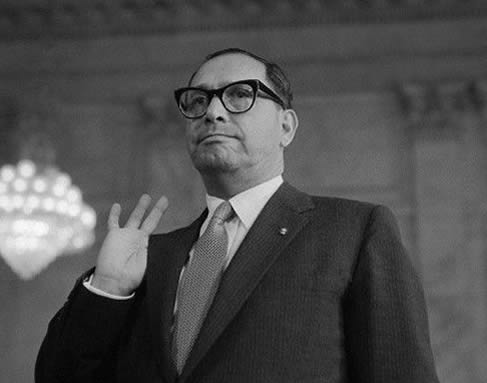
Valachi was now doubly on the spot. Mob leader Genovese still wanted him dead, and the authorities now had him on a murder charge. The only way out for Valachi was to turn federal informer. He did, and in his celebrated public testimony before Senator John McClellan's Permanent Subcommittee on Investigations, he revealed more secrets about organized crime than any witness up until that time.

John Joseph Saupp is chiefly remembered as the hapless catalyst who brought about Valachi's testimony. On his murder, Valachi, a longtime mob hit man, said, "You can imagine my embarrassment when I killed the wrong guy."