Narcotics racket

Narcotics racket

It is difficult to estimate exactly how much wealth narcotics trafficking adds to the coffers of the American Mafia. But narcotics profits, alone, guarantee the organization’s enduring wealth and power. And these profits are regarded as the real source of funds for buying the Mafia’s political and police protection.

J. Edgar Hoover can legitimately be faulted for failing to go after the Mafia and organized crime, but his dogged efforts to keep the FBI out of narcotics investigations is strangely logical. He wanted to keep the reputation of the FBI simon-pure, something he knew would be impossible because corruption and bribery was virtually inevitable in policing the narcotics field.

According to a recent government estimate, the average heroin junkie needs about 50 milligrams of the drug each day to satisfy his cravings. Figuring the average cost at $65 a day, a habit costs $24,000 a year. Many experts consider such figures as much too conservative. But using those figures for a minimum 100,000 hardcore addicts, also a conservative figure, the heroin racket adds up to at least a $2.5 billion business. Add to this the massive trade in marijuana (with at least 10 million regular pot users) and cocaine (considered “safer” than heroin by most users) and the total dollar figure in the narcotics business is clearly staggering.


Of course, the cost to the narcotics dealers is penny ante compared to the rewards. By the 1970s, it was said that the return on capital invested made drug smuggling the most prosperous industry in the world. In 1960, a kilo of heroin was obtainable in Marseilles, France, where it was manufactured from morphine base, for about $2,500.

In New York, it brought $6,000 a kilo wholesale—and over $600,000 on the street. By 1980, a kilo of grade four heroin cost about $12,000 from the supplier and brought a quarter of a million dollars in New York at wholesale prices. Cut with quinine and milk sugar, the heroin sold for several million dollars at street prices. No legitimate business, even Arab cartel oil, could come close to that.

This bottom-line figure made it obvious that the Mafia’s so-called No Narcotics Rule was sheer nonsense. No criminal organization that accepts the murder of human beings as a routine part of business could pass up such profits on the grounds of “honor” and “morality.” Mafia leaders who attempted to proscribe narcotics dealing were either lying or deluding themselves. There was and is no way to keep their criminals out of crime’s most lucrative business.

John Nardi

One of the few criminals in recent years to attempt to dislodge a Mafia family from power with the aid of “outsiders,” John Nardi was a power in the Cleveland Mafia and high up in local Teamsters affairs. For years he had felt that he never got the recognition he deserved under the mob reign of John Scalish, and when the latter died in 1976, he made a bid for power in alliance with Danny Greene, head of the socalled Irish Gang.

Syndicate crime in Cleveland had always been ethnically mixed, with a strong representation of Italian mafiosi, Jewish gangsters headed by the resourceful Moe Dalitz, and various Irish criminals. By the 1970s, the Jewish elements had long since departed for the lush legal gambling climes of Las Vegas and illegal action in Florida. But under various Italian leaders, and finally Scalish, the Mafia had become fairly dominant. However, Danny Greene and the Irish gangsters in alliance with Nardi moved to take over the Cleveland rackets as well as the important mob influence within the Teamsters.

War broke out between the Nardi-Greene forces and those of the mafiosi under James T. “Blackie” Licavoli, also known as Jack White. The Nardi-Greene gangsters scored first, knocking off a number of their enemies with bombs planted in their cars. The Licavoli forces for a time seemed incapable of striking back.

They did come up with a plot to lure Nardi and Greene to New York where they could be hustled to a large meat-packing plant in New Jersey controlled by Paul Castellano, then taking over as boss of the Gambino crime family. It would be possible, as one plotter put it, “to kill them right there, freeze and bury them.”

As quaint a murder plan as it would have been, it never came to pass. Meanwhile, crime families in Chicago and New York grew impatient with the failure of the Licavoli forces to win out. Finally, the Licavolis built a better bomb trap than their foes had built earlier. They loaded a car with dynamite and parked it right next to where Nardi parked his automobile at his Teamsters office.

When Nardi came out to his car, an assassin pushed a remote-control switch which blew up the dynamite car and killed Nardi in the process. Later that same year, Danny Greene was murdered as well. Frank “Funzi” Tieri, head of New York’s former Genovese family, sent congratulations to Licavoli, having greatly admired the way Nardi had been dispatched.

Neighbors of mafiosi

Paul Castellano mansion in Staten Island

When in December 1985 Paul Castellano was shot to death on a New York City street, television and newspaper reporters scurried immediately to the exclusive Todt Hill section of Staten Island where the former head of the Gambino crime family had resided. They failed to find any neighbors with an ill word to say about Castellano. “Great neighbors,” one was quoted, “and a credit to the neighborhood.”

The local residents were particularly proud of the 17-room white-porticoed mansion at 177 Benedict Road which they referred to as “the White House.” Many felt the Castellano family added class to the neighborhood and certainly helped property values.

Such attitudes toward mafiosi by neighbors are hardly unusual. There have never been any major complaints from respectable citizens in fashionable Sands Point, Long Island, where there has long been a considerable Mafia colony. When Tommy “Three- Finger Brown” Lucchese died, he was considered in his Long Island, New York, suburb a “wonderful neighbor.” One told the press: “If he’s a gangster, I wish all of them were.”


Even in Brooklyn in what was the turf of Crazy Joe Gallo a reporter asked a neighbor if he thought the Gallo men were gangsters. “That’s only what the papers say,” was the response.

The general rule of thumb among members of the Mafia and their allies is that they merge with their neighborhoods. Home for many years for top syndicate criminal Meyer Lansky was a three-bedroom ranch-style house in Hallandale, outside Miami. He walked his dog, described rather uncharitably by some newsmen as “the ugliest dog in the world,” and drove rented Chevrolets. Mrs. Lansky helped out image-wise by selling her used clothing in the garage of the house in a typical display of middle-class frugality.

Frank Tieri, the boss of the old Genovese crime family, was also the epitome of neighborly kinship. Around his modest two-family house in the Bath Beach section of Brooklyn, he could be counted on to guide an untended kindergartner out of the street if the child raced out after a ball.

Tony Accardo, the longtime Chicago big shot, a believer in living lavishly, might not have been quite as fondly thought of by neighbors. Often at Christmas time he would install a carillon that would send Christmas carols thundering through the otherwise placid and reserved River Forest area. Other residents probably did not appreciate the noise, but there is no record of any objection made by them. Such complaints would be un-Christian, un-Christmasy—and perhaps unhealthy.

While most neighbors think kindly of mafiosi, these neighbors can rest assured that they have had to pass muster with the mobsters. Most big mobsters have their boys run checks on all the neighbors to learn all about their habits and lifestyles. According to his daughter, Sam Giancana could inform Mrs. Giancana on all the goings-on of various neighbors.

When daughter Antoinette brought other children to the house, Sam immediately checked out their families. If he objected to something in their parents’ backgrounds—ethnicity or other faults—the children were not permitted in the Giancana household again.

It’s smart to stay on the good side of Mafia neighbors. One who did not was 51-year-old John Favara, a friend of John Gotti—known to police at the time as a capo in the Gambino family and called by the law one of the most violent mafiosi. In 1980, Favara ran over and killed Gotti’s 12-year-old son, Frank, in a traffic mishap officially declared accidental. Four months later, Favara was kidnapped as he left his job in a furniture plant; he was never seen again.

According to police, after the death of young Frank, the Favara family had received unsigned threat letters at their Howard Beach, Queens, home, and their car had been spray-painted with the word murderer. Police got reports that Favara had been chain-sawed to death, and then placed in a car that was run through a demolition machine and reduced to a one-square-foot block. Meanwhile, Favara’s wife sold their house and with her son and daughter moved far away from Howard Beach.

Nepotism and the Mafia

Nepotism mafia - Gambino family
Gambino family

It happened at a meeting of the commission in 1988. Although there was great friction between John Gotti of the Gambino family and Chin Gigante of the Genovese family, and indeed the latter had even attempted to have the former whacked, there was an effort at friendly relations.

In a moment of pride, Gotti said that his son, John Junior, was now a made mafiosi. Undoubtedly Gotti expected a round of congratulations. He did not get any from the Chin. Instead, Gigante’s face dropped, and he looked grayer than usual through a five-day growth of beard (his usual composure), “Jeez,” he said, “I’m sorry to hear that.”

It was not sentiment stemming from fear. He was truly sad, his voice tinged with genuine sympathy. No one said anything. Sammy “the Bull” Gravano who was present reflected later, “So here was Chin, who’s supposed to be crazy,” in effect saying that no mob guy should want his son to become a made member of the Mafia. As Gravano noted, “And there was John boasting about it. Who was really crazy?”


Actually most mafiosi claim they do not want their sons following in their footsteps. Most are not successful at preventing it. Their sons see their stature grow because of the fathers’ activities and men with limited education making big money, and their drive to follow in their footsteps often becomes irresistible.

Mobsters who succeed in setting their sons on a straight path usually swell with pride. Tommy “Three-Finger Brown” Lucchese never stopped boasting about his eldest son who went to West Point to lead a successful military career and life that avoided all connection with his father’s “business.”

Chin Gigante never permitted any of his sons to be made. Neither did Paul Castellano nor Sammy the Bull, the latter vowing he would see to it that his son never followed in his footsteps.

Carlo Gambino, at least according to mob dogma, always said he would have his sons stay legit or he would kill them. The fact remains, however, he set them up in the mob-contaminated trucking business in New York’s garment district. If that was an effort to keep them clean, it was a rather unique approach.

There have been many instances of high Mafia bosses moving up as their father’s successor. That was true of the Trafficante father and son in Tampa, the Patriarcas in New England, the Zerillis in Detroit and so on. It remains difficult to determine if the fathers in these cases really wanted that kind of succession.

There is no doubt that Joe Colombo Sr. was following family tradition. His grandfather was in the mob and strangled for some breach of mob etiquette. Similarly, Colombo’s father Anthony was rubbed out in the same fashion in 1938, and it was well known he had broken mob rules. None of this disillusioned Joe Colombo. Once asked by a reporter if he had ever tried to find his father’s killers, Colombo gave him a withering look and snapped, “Don’t they pay policemen for that?” There was no rescuing the third Colombo from the forces of nepotism.

Today the most prominent Mafia son of course is John Gotti Jr. It was said that Gotti originally wanted both his sons, Junior and Frank, to be successful in legitimate fields. The effort to set them straight was wasted in Junior’s case. Years of training at a military academy did little good, and he gravitated to the fringes of the mob, soon being dubbed the “baby monster” by the press (and by other mafiosi out of hearing range of his father).

The elder Gotti had no choice but to accept his son into the Gambino family. It might have been different in the case of young Frank, who unlike his brother, showed a great aptitude for learning. Gotti sent Frank to an expensive private school and beamed about his son’s academic abilities.

He would corner mob associates (some of whom could barely read) with his report card. “Look at that, four fucking A’s! Did you ever hear of a kid who was so smart in school, huh?” And Gotti was even more impressed by the teachers’ many comments of praise added on the back of the report card.

Gotti intended to send his son to a top Ivy League university and probably would have made sure he became a leader in some honest profession.

Then 12-year-old Frank was killed while riding his bike when a car driven by a neighbor, John Favara, struck him. Favara would die for his no-fault driving. That probably placated John Gotti to some extent and perhaps weakened his resolve to save Junior from the life.

After John Gotti went to prison for life, he had to name his son “acting boss” of the crime family because under prison regulations he could visit his father and through various codes get orders to pass along to the mob. With John Jr.’s subsequent imprisonment for 77 months, during which time the elder Gotti died, the son could entertain the possibility he might get out and perhaps be free of his underworld problems. But by 2003 it was apparent that that probably would not come to pass.

It was said testimony by a highly prized turncoat could be the vehicle for numerous other charges against the younger Gotti. “Mikey Scars” DiLeonardo would probably implicate Junior in a number of violent crimes. One would be the stabbing death in 1983 of 24-year-old Danny Silva in a dispute in a Queens bar. Then there would be Mikey Scars’ testimony in the 1992 “Bonnie and Clyde” ordered hit of Thomas and Rosemarie Uva who had robbed a string of mob-tied social clubs. The pair ended up each with three bullets in the head.

Then there was the informer’s expected testimony concerning Junior’s alleged knowledge of the 1992 attempted killing of Guardian Angels founder and talk radio host Curtis Sliwa after he made disparaging onair remarks about the Dapper Don. Sliwa took lead in the back and in his legs as he desperately departed a taxi his assailants had stolen.

It is really only a fine point whether some mafiosi manage to keep their offspring from becoming made men. Among those who follow in their father’s footsteps there is no likelihood they will move up the management ladder. In fact, often the comparison with the father makes it most difficult for them. Joe Bonanno tried to make either of his sons fit for leadership but failed miserably. By the time of his death in 2002, the elder Bonanno had given up that hope, finally realizing neither could, would or perhaps even wanted to cut the mustard.

Both Chin Gigante and Sammy the Bull insisted they would never allow their offspring to take Mafia vows, but they were far less successful keeping them on the straight and narrow. In 2002 the Chin’s son, Andrew Gigante, pleaded guilty to conspiracy to commit extortion and accepted a two-year prison term. When Sammy the Bull was convicted in his “rehabilitation” days for a major Ecstasy racket, his wife and daughter were caught in the net, as well as his son, no matter the Bull’s vow. Whatever Sammy was, he was hardly a lovable dad.

In the Gigante, Gravano and Gotti cases nepotism apparently was a disaster for the offspring. Most mob guys fail at this, but at least one mob boss apparently did a good job of shielding his son from any criminal activities. Anthony “Tony Ducks” Corallo was one major godfather who shielded his family, whom he called “the dearest thing in the world,” and insisted their privacy not be tampered with.

Carolla never provided any information about his survivors, a son and daughter, and his orders were still strong enough on his death in 2000 that friends and allies would not provide any information about them.

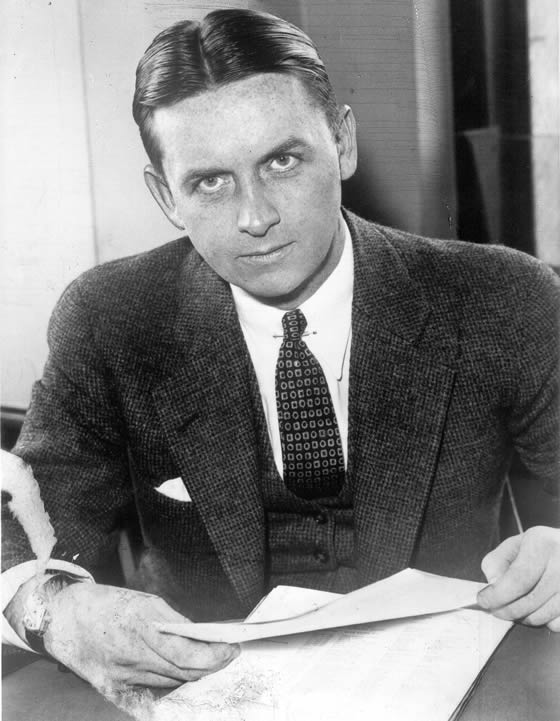
Eliot Ness

Eliot Ness

In 1928, a University of Chicago graduate, 26-yearold Eliot Ness, was put in charge of a special Prohibition detail set up to harass the Capone gang. The local police and regular Prohibition agents were incapable of doing so since most, if not all, were on one or another of Capone’s bribe payrolls.

Ness set about assembling a squad of nine agents who would be “untouchable,” or unbribable. Meticulously, he went through hundreds of files until he came up with nine agents—all in their 20s—who had “no Achilles’ heel in their make-ups.” Incorruptible, they also were experts in varied activities helpful in fighting bootleggers—wiretapping, truck driving and, above all, marksmanship.

When the detectives moved into action, the underworld soon found them to be dedicated to their task, defiant of all threats and violence and unresponsive to cash payments. It was the underworld, stunned to find lawmen of the period who could neither be bought nor frightened, that dubbed Ness’s men the “Untouchables.”


The Untouchables are now a part of American criminal folklore. Latter-day television, in a show called The Untouchables, attributed much more credit and impact to them than they deserved, insisting they practically brought the Capone organization to its knees. Actually, their frequent raids of mob stills and distribution centers did cost the Capones a considerable amount of money but hardly caused Chicago to dry up—despite the claims of Ness at the time and his enthusiastic biographers then and now.

Ness thrived on personal publicity and always informed the press whenever a major raid on a brewery was in the works. The army of photographers who descended on the site frequently got in the way and sometimes even caused a raid to be bungled, but Ness’s superiors were pleased.

The publicity he produced proved that the Capone gang was not invulnerable. And Ness did provide a sort of smokescreen, distracting Capone while other federal agents infiltrated his organization to come up with tax evasion facts that eventually sent America’s greatest gangster to prison.

The Untouchables
The Untouchables

After the fall of Capone, Ness continued warring on Prohibition violations in Chicago and, later, in the “moonshine mountains” of Tennessee, Kentucky and Ohio.

Although his Chicago exploits are best remembered, Ness’s most impressive work against organized crime took place in Cleveland, Ohio, where he was named public safety director in 1935 by a reform city administration. Cleveland at the time was as corrupt a big city as any in the nation, its police force notorious for being “on the pad,” taking underworld graft. Builders couldn’t operate in the city without paying off labor racketeers.

A vicious gang called the Mayfield Road Mob, Jewish and Italian criminals working in profitable harmony, strangled and blighted virtually every neighborhood with gambling, bootlegging and prostitution rackets. Violence was common on the streets, and gang killings and the one-way rides were about as prevalent as they were in Chicago. Given a free hand, Ness knew that if he was to create a new environment in the city he would have to reform the police department. He ordered mass transfers and fired officers for taking bribes or being drunk on duty.

During his six years on the job, Ness himself was the object of shootings, beatings, threats and even an attempted police frame-up. But in the end, Ness was able to carry out what was called his “Midwest Mopup,” transforming Cleveland, in the words of one crime historian, “from the deadliest metropolis to ‘the safest big city in the U.S.A.’” The Mayfield Road Mob was crushed, and such syndicate leaders as Moe Dalitz were forced to move their gambling operations to outlying counties, and, eventually, because of continuing pressure, into northern Kentucky.

During World War II, Ness served as federal director of the Division of Social Protection for the Office of Defense, cracking down on prostitution and venereal disease around military establishments and vital production areas throughout the country. After the war, he worked in private business until his death at 54 in 1957.

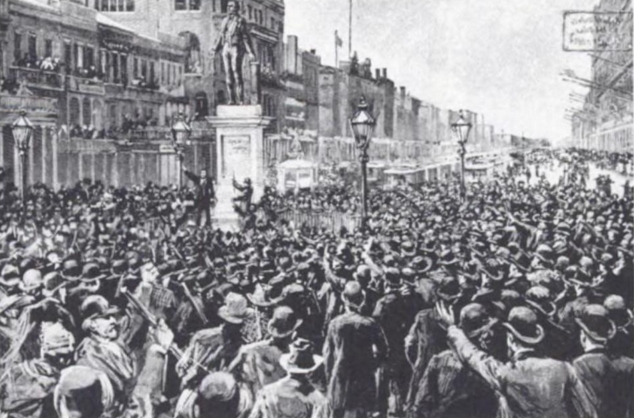
New Orleans mafia mass lynchings

New Orleans mafia mass lynchings

There are two theories about the infamous mass lynchings of (alleged) mafiosi in New Orleans in 1891: One, an enraged populace rose up against Mafia criminality, which was real and running roughshod over the law; two, the attack was triggered by the most heinous, bigoted feelings and actually encouraged by the power structure of the day.

Just a week after the lynching the Saturday Review stated, “it is at least possible that some hatred of very industrious and successful competitors in business mingled with the more respectable zeal of the lynching party.” Neither theory is airtight. Although there was some desire to undermine the growing economic power of local Italian Americans, only the most rabid of the “there-ain’t-no-mafia-school” could deny the criminal society’s presence in New Orleans.

New Orleans probably was the most anti-Italian city of the era, and its mayor, Joseph A. Shakespeare, was one of the most anti-Italian politicians of his time. A letter from his office castigated Southern Italians and Sicilians as “ ... the most idle, vicious and worthless people among us .... Except the Poles we know of no other nationality which is [as] objectionable as a people.”


But turn-of-the-century New Orleans was filled not only with venal politicians and police on-thetake, but also with many Italian criminals. It was the Italian immigrants who jammed the New Orleans ghettos, which, like any other ghetto, spewed out criminals. Undoubtedly, many Italian criminals of the period were not mafiosi, but it must be conceded that New Orleans represented one of the main ports of entry for mafiosi into the United States, probably rivaling New York.

It is difficult to pinpoint the first appearance of the Mafia in America but it was probably in New Orleans during the late 1800s. Between 1888 and 1890 the New Orleans Mafia (made up of disparate groups as was the case in Sicily) committed an estimated 40 murders without serious opposition.

During this period, Antonio and Carlo (or Charley) Matranga, two Honored Society members from Palermo, Sicily, took control of the Mississippi River docks. Tribute had to be paid to them before a freighter could be unloaded. However, the Matranga operations were challenged by the Provenzano brothers, leaders of another Mafia group. War broke out between the two groups, and killing along the docks became a regular occurrence.

The police failed to stop the battling until the flamboyant chief of police, David Peter Hennessey, personally took over. Soon the Matrangas found themselves hassled at every turn while the Provenzanos were left virtually unbothered. The Matrangas sent warning to the chief but the pressure continued. So they tried to bribe him, only to have him reject their offer.

This convinced the Matrangas that the Provenzanos had offered him more and that Hennessey was determined to have a piece of the riverfront rackets for himself. So they fell back to an old Sicilian custom of killing the government official who got in their way. They did not understand the ramifications that would follow the killing of an American police chief.

Hennessey wrote his epitaph when police, conducting a routine murder investigation, charged two Provenzano brothers with complicity in the murder of a Matranga gangster whose head had been sliced off and stuffed in a fireplace. The Matrangas, determined to kill off the Provenzanos, hired some of the city’s foremost lawyers to aid the prosecution. Then Chief Hennessey came to the rescue.

He told the press he had uncovered the existence of a criminal society, the Mafia, in the city and would offer proof during the Provenzanos’ trial. On October 15, 1890, Hennessey left his office for home. He was cut down by a shotgun blast a half-block from his house. Hennessey managed to direct some shots at a number of his fleeing assailants and when asked who had shot him, he whispered “Dagoes” and collapsed.

The murder outraged the citizens of New Orleans who liked Hennessey, despite many unsavory elements in his police record with the city and despite the likelihood that he might be on the take. A grand jury was convened and announced that “the existence of a secret organization known as the Mafia has been established beyond doubt.” Nineteen men described as Mafia members were indicted as principals and conspirators in the Hennessey murder, but the trial was perceived by most people as a farce.

A large number of the 60 potential witnesses were threatened, intimidated or bribed, and several members of the jury were later found to have taken bribes as well. Despite what was regarded as overwhelming evidence against at least 11 of the defendants, all but three were acquitted, and the jury could not reach a verdict on these three.

All the defendants were returned to the parish prison to await final disposition of their case and then released. There can be little doubt there was considerable elation and celebration of the jury verdict in the Italian section of the city, which inflamed public opinion. (Some observers maintain that the celebrations in the Italian quarter were solely festivities for the birthday of King Umberto I of Italy, but it is ludicrous to believe that a people as discriminated against as the Italians would not celebrate the acquittal of their countrymen. If they had not, the Italians would have been strikingly different from any other national or racial group under similar circumstances.)

What followed was a blot on New Orleans. Two days after the trial’s surprise ending, a great number of mass meetings and other protests fanned by outright bigotry were held. Ultimately, a mob of several thousands, headed by 60 leading citizens, marched on the jail. They had a death list composed of the 11 defendants against whom the evidence was the strongest. Left off the list were those defendants against whom the evidence was weakest, including the Matranga brothers.

Two of the mafiosi were pulled screaming to the street and hanged from lampposts. Seven others were executed by firing squads in the jail yard, and two more were riddled with bullets as they hid in a doghouse built for the jail’s guard dog. Prominent in the lynch mob were a goodly number of blacks, giving the lynching a unique dimension in the American South.

While some newspapers denounced the hangings, the citizens and especially the business community seemed rather pleased by what had been done. A new song, “Hennessey Avenged,” by a popular poet named Fred Bessel became a best-seller. For a time the lynchings threatened international complications. Italy recalled its ambassador, severed diplomatic relations with the United States and demanded reparations and punishment for the lynchers. Eventually, the affair was settled with Washington paying $25,000 to the dead men’s relatives in Italy.

The lynchings did not kill the Mafia in New Orleans, although newspapers announced, “The Mafia Exterminated.” However, the affair did make an impression on mafiosi. Charley Matranga, who was to pick up the leadership of the mafiosi in New Orleans and rule until the early 1920s, managed to stay in the background thereafter and issue orders that were carried out by front men. And when Lucky Luciano formed the national crime syndicate, a basic rule was enunciated that under no circumstances was a police officer to be murdered.

Night of the Sicilian Vespers

Night of the Sicilian Vespers

According to a former U.S. attorney general, “forty members of La Cosa Nostra died by gunfire” on September 10, 1931—the same day the Luciano-Lansky forces eradicated the last obstacle to their power, Salvatore Maranzano.

Many criminal accounts hold these murders took place all around the country as old Mustache Petes were assassinated to make way for the new order of organized crime. Yet, no one has ever been able to compile a list of the 40 supposed victims on the Night of the Sicilian Vespers.

A number of murders in the New York area were tied to Maranzano’s fate, but these were more or less predictable rubouts of the crime leader’s more ardent supporters. Such underlings included Jimmy Marino, gunned down as he stood in the doorway of a Bronx barbershop, and Louis Russo and Sam Monaco, who were reported missing and not found for three days when their bodies, throats slit and skulls smashed, washed ashore in Newark Bay. (Informer Joe Valachi recollected, “Sam had an iron pipe hammered up his ass.”) The Luciano-Lansky final touch was obvious: Maranzano faithful were admonished to eschew revenge and join the new setup.


But what of the alleged murders glorified in the press as the Night of the Sicilian Vespers? Luciano maintained that mass slayings were unnecessary, and he was right. Younger mafiosi around the country had been knocking off older Mustache Petes in the past few years for the same reason Luciano had killed Maranzano and before him Joe the Boss Masseria: They stood in the way of new ways to make money. And Luciano said, “The real and only reason Maranzano got his was so that we could stop the killin’. That it was all over.”

There was one other killing that fatal night, however. Gerardo Scarpato, the owner of the Nuova Villa Tammaro, the Coney Island restaurant where Joe the Boss was murdered, was killed.

Scarpato had conveniently disappeared from the restaurant to go for a walk along the beach before Luciano went to the bathroom and four killers walked in and gunned down Joe the Boss. It may be presumed that Luciano felt killing off Scarpato would be a nice gesture to the Masseria faithful.